
A septic inspection tells you whether the tank, the pipes and the drain field are working, and catches small problems before they become big ones. It is a routine maintenance task every few years and an essential step when you buy a house with a septic system. Here is what it costs and what you should expect the inspector to check.
Key points
- HomeGuide puts the national average around $290, with routine inspections usually $150 to $450.
- Inspections for a home sale are more thorough and cost more, commonly $300 to $650.
- Digging up buried lids, pumping and camera inspections are often extra.
- The EPA recommends a professional inspection at least every three years for a typical household system.
Septic inspection cost
| Type of inspection | Typical cost | Source |
|---|---|---|
| Routine maintenance inspection | $150 to $450 | HomeGuide |
| Inspection for buying or selling a home | $300 to $650 | HomeGuide |
| Real-estate inspection, south-central Pennsylvania (2026) | $350 to $700 | Penn State Extension |
| Digging to uncover the tank | Adds $50 to $250 | Angi |
National and regional estimates checked in November 2026. Prices vary by region, system type and access.
Types of septic inspections
Visual or walk-through inspection
The inspector asks about the system history, runs water in the house and walks the yard looking for wet spots, odors and signs of surfacing effluent. It is quick and inexpensive, but it cannot see inside the tank. It is not enough for a home purchase.
Full (functional) inspection
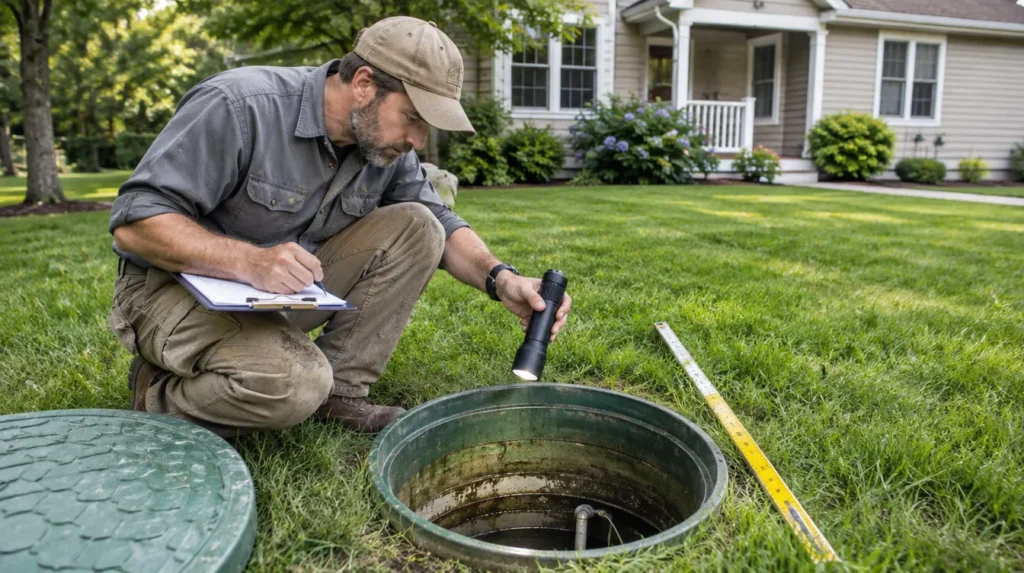
The inspector locates and opens the tank, measures the sludge and scum layers, checks the baffles and effluent filter, looks for cracks and leaks, and evaluates the drain field. Many companies pump the tank as part of the inspection so they can see the walls and outlet. This is the standard for real-estate transactions and lenders.
Add-ons
- Camera inspection of the line from the house to the tank or of the distribution lines.
- Hydraulic load or dye test to see how the drain field handles water.
- Distribution box check to confirm effluent is split evenly.
- Alarm, pump and control panel test for pumped and alternative systems.
What a good inspection report includes
- Location of the tank, distribution box and drain field, ideally with a sketch.
- Tank size, material, number of compartments and condition.
- Sludge and scum measurements and a recommendation on when to pump.
- Condition of baffles, effluent filter, lids and risers.
- Drain field condition and any signs of saturation or surfacing.
- Photos and a clear list of repairs, if any.
When to get an inspection
- Every three years for a typical household system, according to the EPA, and about once a year for systems with pumps, float switches or other mechanical parts.
- Before buying a home. Penn State Extension stresses having the system inspected by a certified inspector before you purchase a property.
- Before selling, so there are no surprises during the buyer’s inspection.
- When you notice warning signs such as slow drains, odors or wet areas. See signs of a failing septic system.
- Before adding bedrooms or making changes that increase water use.
How to save on inspection costs
- Schedule inspection and pumping together; many companies discount the combined visit.
- Install risers so the lids are at ground level and no digging is needed.
- Have your permit records ready; the county health department often has the site drawing and tank size.
- Ask whether the inspector is certified for real-estate inspections in your state if you are buying or selling.
If the inspection finds a serious problem, read septic system replacement costs to understand the options.
Sources
- HomeGuide: Septic Tank Inspection Cost
- Penn State Extension: On-Lot Septic System Inspections During Real Estate Transactions
- Angi: Septic Inspection Cost
- U.S. EPA: How to Care for Your Septic System
Prices are estimates, not quotes. Septic Tips does not sell inspections and is not paid by any inspection company.