
Walk down the water softener aisle and you will find pellets, crystals, “solar” salt, rock salt and potassium chloride, often at very different prices. They all recharge the resin in your softener, but they differ in purity, how much residue they leave in the brine tank and who they suit best. Here is how to choose.
Key points
- There are three kinds of sodium chloride softener salt: rock, solar and evaporated. Evaporated is the purest; rock salt is the cheapest.
- Purer salt leaves less sediment, so the brine tank needs cleaning less often.
- Potassium chloride works in most softeners and adds potassium instead of sodium, but it costs more.
- Use the type your softener manual recommends, and keep the salt level only a few inches above the water.
Types of water softener salt
Rock salt
Mined from underground deposits, rock salt is the least expensive option. It contains more insoluble minerals, which settle as sludge in the brine tank. That means more frequent tank cleaning and a higher risk of clogs. Some manufacturers do not recommend it.
Solar salt
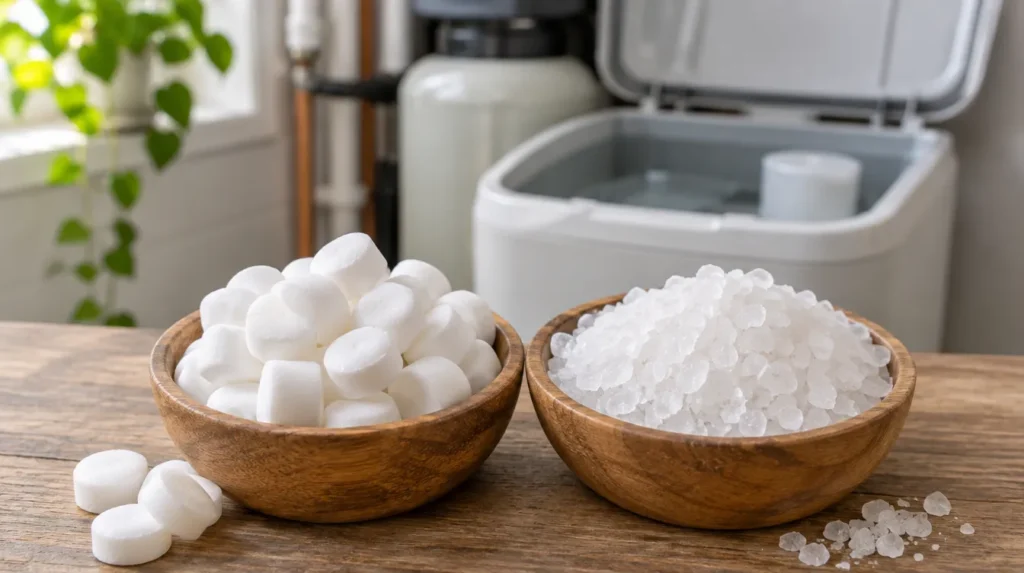
Solar salt is made by letting seawater or natural brine evaporate in large outdoor ponds. It is sold as crystals or pellets and is purer than rock salt, though it can still leave some residue. Its price usually falls between rock and evaporated salt.
Evaporated salt
Evaporated salt comes from purified brine that is evaporated with heat. It is the purest form of softener salt, leaves the least residue and is usually sold as pellets. It costs more, but many owners find it worth it because the brine tank stays cleaner.
Potassium chloride
Potassium chloride is a sodium-free alternative that works in most softeners. It is popular with people limiting sodium. It is more expensive than sodium chloride, and you may need to raise the salt setting on your softener because it regenerates the resin slightly less efficiently. Check your owner’s manual before switching.
| Type | Purity | Cost | Best for |
|---|---|---|---|
| Rock salt | Lowest | Lowest | Tight budgets, where the manufacturer allows it |
| Solar salt | Medium to high | Medium | Most households |
| Evaporated salt | Highest | Higher | Low maintenance, fewer clogs |
| Potassium chloride | High | Highest | People limiting sodium |
Pellets vs. crystals
Form matters as much as source. Pellets are compressed salt and are the most common choice for modern single-tank and two-tank softeners. Crystals are loose, coarser pieces that some older or two-tank systems handle well. GE, for example, recommends nuggets, pellets or coarse solar salt and only clean salt of 99.5% purity or higher. When in doubt, follow the manual.
How much salt to keep in the tank
- Check the brine tank about once a month.
- Keep the salt level a few inches above the water line. Angi suggests 2 to 3 inches above the water level; too much salt can bridge and too little reduces softening.
- Do not overfill the tank to the top. Overfilling and humid rooms are common causes of salt bridges.
- Avoid mixing different types; use up one before switching.
Does softener salt affect a septic system?
The salt itself is flushed out with the regeneration water. The bigger concern for a septic system is the extra water each regeneration sends to the tank. Choose an efficient, demand-initiated softener sized for your home and set it to your real water hardness. Read more in what a water softener does.
If the salt level is not going down or the water feels hard again, see water softener troubleshooting.
Sources
- Angi: What Is Water Softener Salt?
- Angi: When Your Water Softener Seems to Be Malfunctioning
- Culligan: What Is the Best Water Softener Salt?
- GE Appliances: Water Softener Salt Type
- Compass Minerals SureSoft: Frequently Asked Questions
This guide is general information. Always follow your water softener manufacturer’s instructions for salt type and settings.