
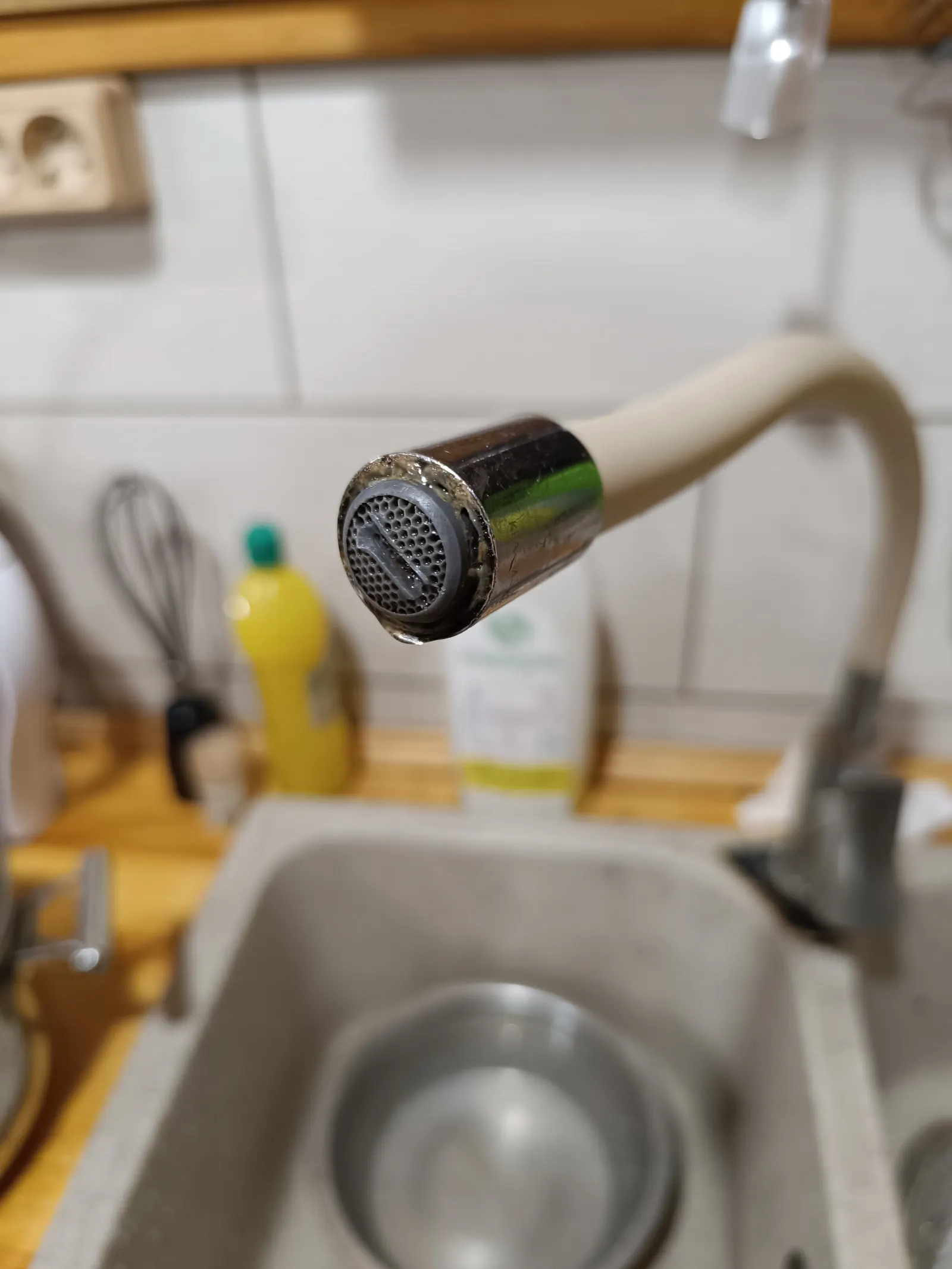
White crust on faucets, spotty glasses, soap that will not lather and a water heater that seems to wear out early: these are classic signs of hard water. A water softener fixes the cause by removing the minerals that make water hard. Here is how it works, when you actually need one and what it means if your home also has a septic system.
Key points
- A water softener removes calcium and magnesium, the minerals that cause hard water and scale.
- Most softeners use ion exchange: resin beads swap hardness minerals for sodium or potassium.
- Water above about 7 grains per gallon (gpg) is generally considered hard enough to justify a softener.
- Softeners add some sodium to the water and use water during regeneration, so efficient models matter.
What is hard water?
Hard water contains dissolved calcium and magnesium picked up as groundwater moves through rock and soil. Hardness is measured in grains per gallon (gpg) or milligrams per liter (mg/L, the same as parts per million). One grain per gallon equals about 17 mg/L. This is the classification commonly used by the Water Quality Association and university extension programs:
| Classification | Grains per gallon | mg/L (ppm) |
|---|---|---|
| Soft | Less than 1.0 | 0 to 17 |
| Slightly hard | 1.0 to 3.5 | 17 to 60 |
| Moderately hard | 3.5 to 7.0 | 60 to 120 |
| Hard | 7.0 to 10.5 | 120 to 180 |
| Very hard | Over 10.5 | Over 180 |
How a water softener works
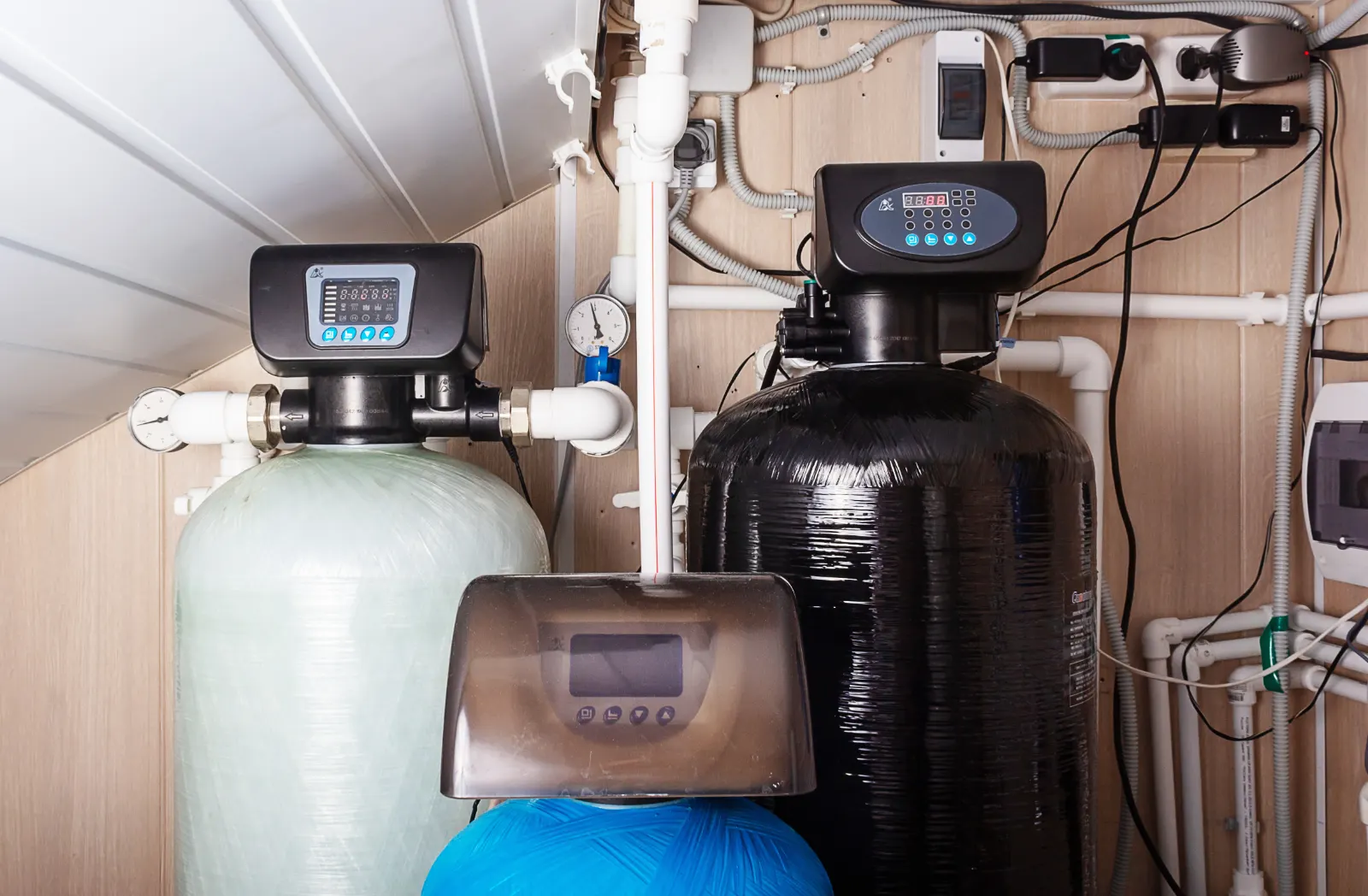
Nearly all household softeners rely on ion exchange. A typical unit has two tanks and a control valve:
- Resin tank: filled with small resin beads that hold sodium (or potassium) ions on their surface.
- Brine tank: holds the salt that recharges the resin.
- Control valve: decides when the system regenerates, by a timer or, on better models, by how much water has been used.
Step 1: Ion exchange
As hard water flows through the resin tank, the beads grab calcium and magnesium ions and release sodium ions in their place. The water that comes out is soft.
Step 2: Regeneration
Eventually the beads are full of hardness minerals. The softener then rinses them with salty brine from the brine tank. The high concentration of sodium pushes the calcium and magnesium off the beads, and that wastewater is flushed down the drain. The resin is ready to soften again.
Do you need a water softener?
Start with a water test. Many homeowners notice problems once hardness passes 6 to 7 gpg, and around 7 gpg is a common threshold for recommending a softener. Signs that hard water is costing you money include:
- Scale on faucets, showerheads and inside kettles
- Spots and film on dishes and glass shower doors
- Soap and shampoo that do not lather well
- Stiff, dull laundry
- Reduced flow from clogged aerators and showerheads
- Water heaters and appliances that need repair or replacement early
How to choose the right size
Softeners are rated by grain capacity: how many grains of hardness they can remove before they need to regenerate. A 32,000-grain unit, for example, removes 32,000 grains per cycle. To estimate what you need, multiply your water hardness (gpg) by the gallons your household uses per day. That gives the grains removed per day; a properly sized unit should go several days between regenerations.
The EPA recommends looking for efficient, certified models: units that use 4 gallons of water or less per 1,000 grains of hardness removed and remove more than 3,350 grains per pound of salt. Demand-initiated models, which regenerate based on actual water use instead of a fixed schedule, waste less salt and water.
Sodium, salt and drinking water
Because softeners swap hardness for sodium, softened water contains extra sodium: roughly 7.5 to 8 mg per liter for every grain per gallon of hardness removed, according to Penn State and University of Nebraska extension. People on a low-sodium diet can use potassium chloride instead of salt or keep one unsoftened tap, or add a reverse osmosis filter for drinking water.
Water softeners and septic systems
If your home has a septic system, regeneration sends brine and rinse water into the tank. The main concern is volume: every regeneration adds water, and an oversized or timer-based unit can regenerate more often than needed. To reduce the load on your septic system:
- Choose an efficient, demand-initiated softener sized for your household.
- Make sure the unit is set to your actual water hardness, not a factory default.
- Fix leaks and spread out water use, as you would for any septic system.
- Follow the manufacturer instructions and local rules on where the discharge line can go. Some areas require it to drain outside the septic system.
Learn more about protecting your system in how a septic system works and what not to put down the drain.
Maintenance basics
- Check the salt level in the brine tank about once a month and keep it at least a quarter full.
- Break up salt bridges, a hard crust that can form in the brine tank and stop regeneration.
- Use clean softener salt pellets or crystals made for water softeners.
- Retest your water once a year to confirm the unit is working.
Related guides
Sources
- University of Nebraska-Lincoln Extension: Water Softening (Ion Exchange)
- Penn State Extension: Water Softening
- NDSU Extension: Water Softening (Ion Exchange)
- U.S. EPA WaterSense: Water Softener Fact Sheet
This guide is general information for homeowners. If you are on a sodium-restricted diet, ask your doctor before drinking softened water.