
The septic tank gets most of the attention, but the drain field does most of the treatment and is by far the most expensive part to replace. Knowing how it works, how big it needs to be and what damages it is the best way to make it last.
Key points
- The drain field (also called a leach field or soil absorption field) spreads effluent from the tank into the soil, which filters and treats it.
- Its size depends on the number of bedrooms and how fast the soil absorbs water, measured with a percolation (perc) test.
- Too much water, solids from an unpumped tank, vehicles and tree roots are the main threats.
- Keep it covered with grass, uncompacted and free of extra runoff.
What the drain field does
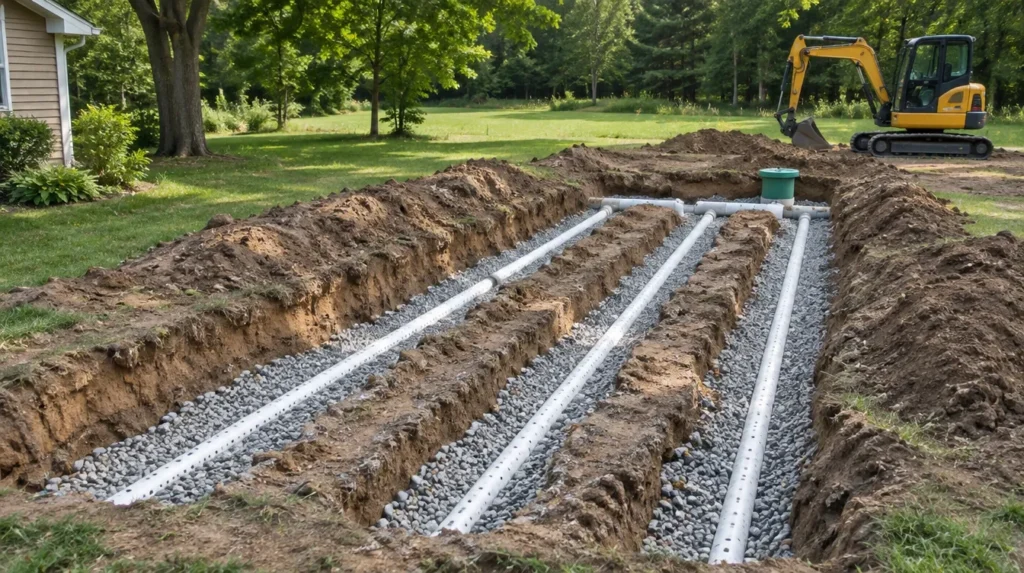
After solids settle in the tank, the liquid effluent flows to the drain field: a shallow, covered area of unsaturated soil. Perforated pipes, gravel trenches or plastic chambers release the effluent slowly into the ground. As it moves down through the soil, the soil filters it and removes harmful bacteria, viruses and some nutrients before the water reaches groundwater, according to the EPA.
Drain field vs. leach field
The terms mean the same thing for homeowners. Some professionals use “leach lines” for the pipes alone and “leach field” for the whole area of trenches and soil, but either name refers to the part of the system that disperses effluent into the ground.
Common drain field designs
- Gravel trenches: perforated pipe laid on washed gravel in shallow trenches. The traditional design.
- Chambers: open-bottom plastic arches that replace the gravel and leave space for effluent to spread.
- Pressure-dosed fields: a pump sends measured doses of effluent so it spreads evenly through the whole field.
- Mound systems: a raised bed of sand built above the natural soil, used where groundwater or bedrock is too close to the surface.
Which design a property gets depends on soil, slope, groundwater depth and local rules. Elevated designs such as mounds are typically used where groundwater is high or bedrock is shallow.
How big is a drain field?
Two numbers drive the size: the number of bedrooms, which estimates daily wastewater flow, and the soil percolation rate, which measures how quickly the soil absorbs water. Many health departments require a percolation (perc) test before they approve a site. In Nebraska, for example, the perc test result and the number of bedrooms together set the minimum drain field size.
Fast-draining soils need a smaller field than heavy clay. As a rough guide, cost-guide estimates put a typical three-bedroom home somewhere roughly 495 to 1,050 square feet of absorption area, but your designer calculates the real number from local code and test results.
What damages a drain field
- Too much water: leaks, back-to-back laundry and roof drains or sump pumps aimed at the field can saturate the soil. Using more water than the soil can absorb is one of the most common causes of failure.
- Solids from the tank: when a tank is not pumped, sludge and scum escape and clog the soil. See how much pumping costs.
- Weight: parking or driving on the field compacts soil and can crush pipes.
- Pavement and buildings: concrete and asphalt block the oxygen the soil bacteria need.
- Roots: trees and shrubs can grow into pipes. Grass and shallow ground covers are the best cover.
- Grease, wipes and chemicals: read what not to flush with a septic system.
Signs your drain field is struggling
Soggy ground or standing water over the field, a sewage smell in the yard, very green grass in strips, and slow drains or gurgling in the house can all point to a drain field problem. Read the full list of warning signs of a failing septic system and call a septic professional if you notice them.
Drain field care checklist
- Pump and inspect the tank on schedule.
- Mark the field so nobody drives or builds on it.
- Keep roof drains, sump pumps and irrigation away from it.
- Plant only grass or shallow-rooted ground covers.
- Spread out heavy water use through the week.
If the field does fail, replacement is a major project. Read septic system and drain field replacement costs to know what to expect.
Sources
- U.S. EPA: How Your Septic System Works
- U.S. EPA: How to Care for Your Septic System
- University of Nebraska–Lincoln Extension: Traditional Drainfields for Effluent Treatment
- Oregon State University Extension: Why Do Septic Systems Fail?
This guide is general information. Drain field design and repairs require a permit in most areas; work with a licensed designer or installer.