
A septic system is designed to handle two things from the toilet: human waste and toilet paper. Everything else either adds solids the tank cannot break down, clogs pipes and filters, or kills the bacteria that do the treatment. The good news is that most septic damage is preventable with a few habits.
Key points
- Only flush human waste and toilet paper.
- Grease, oil and fats are among the most damaging things you can pour down a kitchen drain.
- “Flushable” wipes still do not break down like toilet paper. Put them in the trash.
- Garbage disposals and harsh chemicals shorten the time between pumpings.
Never flush these items
The EPA lists the following items as things that should never go into a toilet connected to a septic system:
- Wipes of any kind, including baby wipes, wet wipes and products labeled “flushable”
- Feminine hygiene products, tampons and applicators
- Diapers
- Condoms
- Dental floss
- Paper towels and facial tissues
- Cat litter
- Cigarette butts
- Coffee grounds
- Medicines and pharmaceuticals
- Photographic solutions and household chemicals such as gasoline, motor oil, pesticides, antifreeze, paint and paint thinners
Most of these do not break down in the tank. They add to the sludge and scum layers, which means more frequent pumping, and some can slip past the outlet and clog the drainfield. Medicines and chemicals are a different problem: they can harm the bacteria in the tank and pass into groundwater.
Keep these out of the kitchen sink
Grease, oil and fats
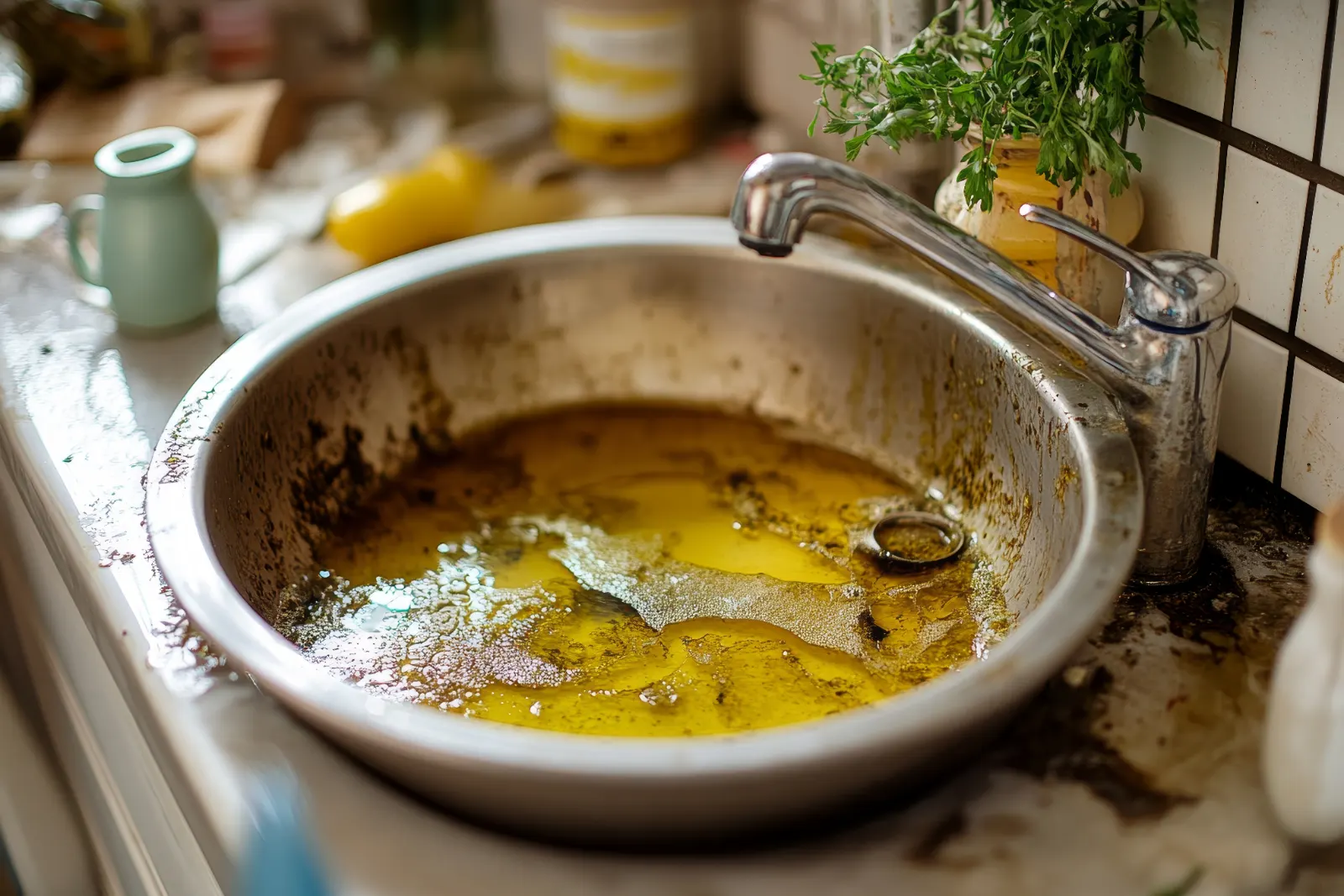
Cooking oil, bacon grease, butter, cheese, heavy cream and other fats float to the top of the tank and thicken the scum layer. They can also cool and harden in pipes. Let grease cool in a can or jar, then put it in the trash, and wipe greasy pans with a paper towel before washing them.
Food scraps and the garbage disposal
A garbage disposal makes it easy to send food down the drain, but the tank still has to store those solids. Frequent disposal use means the tank needs to be pumped more often. Compost scraps or put them in the trash instead, and use a sink strainer.
Chemical drain openers
Harsh drain cleaners can kill the bacteria in your tank. For a slow drain, try boiling water or a drain snake first, and call a plumber if the clog keeps coming back.
Cleaning products: what is safe?
Normal amounts of household cleaners, laundry detergent and dish soap are fine for a working septic system. The problem is large amounts or strong chemicals poured down the drain all at once. A few practical rules:
- Use cleaners in normal, label-recommended amounts.
- Never pour leftover oil-based paint, solvents or pesticides down any drain. Take them to a household hazardous waste collection site.
- Rinse latex paint brushes sparingly, and dispose of leftover paint according to local rules.
- Avoid continuous-release toilet bowl cleaners that drip chemicals into the tank with every flush.
Water is also something you put down the drain
Too much water at once can push solids out of the tank and flood the drainfield. According to the EPA, an average single-family home can use up to 70 gallons of indoor water per person per day, and a single leaky or running toilet can waste up to 200 gallons a day. To protect your system:
- Fix leaky faucets and running toilets quickly.
- Spread laundry over the week instead of doing every load on one day.
- Run the dishwasher and washing machine only with full loads.
- Consider high-efficiency toilets (1.6 gallons per flush or less) and showerheads.
- Do not drain hot tubs or pools into the septic system.
A simple household checklist
Put a small trash can in every bathroom, keep a grease jar next to the stove and post a short “toilet paper only” note for guests. These small habits do more to protect a septic system than any additive sold in a store.
If you notice slow drains, gurgling pipes or soggy spots in the yard, read our guide to the warning signs of a failing septic system. To understand why these rules matter, see how a septic system works.
Related guides
Sources
- U.S. EPA: How to Care for Your Septic System
- Virginia Cooperative Extension: What Happens If My Septic System Fails?
This guide is general information for homeowners. Check with your county health department or a licensed septic professional about rules for your area.