
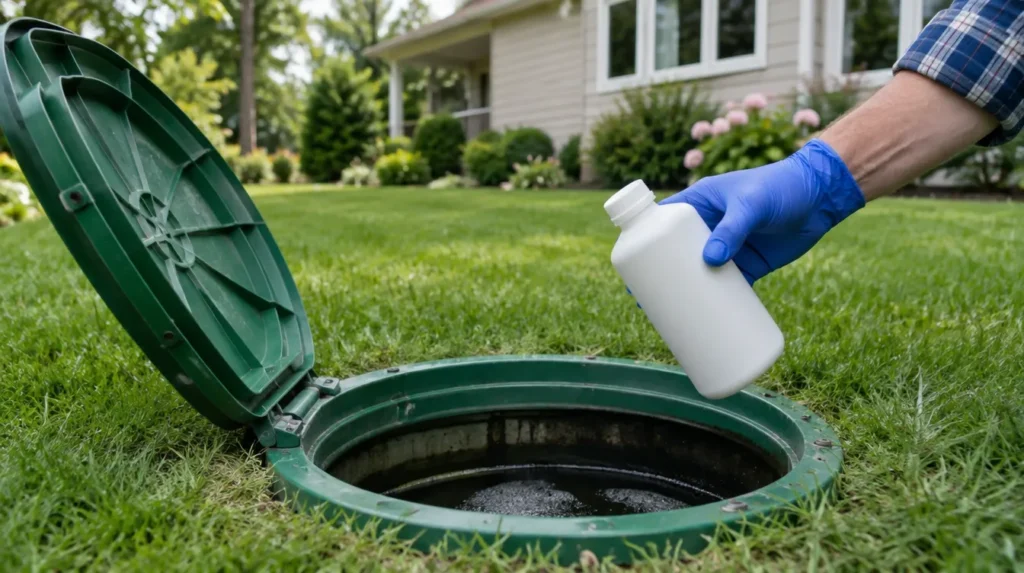
Store shelves are full of septic treatments that promise to “boost bacteria,” “restore” a drain field or reduce pumping. They are easy to buy and cost only a few dollars a month, so it is natural to wonder whether you should be using one. The short answer from regulators and university experts: a properly working, well-maintained septic system does not need them.
Key points
- Human waste already supplies the bacteria a septic tank needs.
- Additives do not replace pumping, and none will repair a failed drain field.
- Some chemical additives can harm the tank, the soil or groundwater.
- Regular pumping, water efficiency and keeping the wrong things out of the drain are what actually protect the system.
What septic additives claim to do
Additives fall into two broad groups. Biological additives contain bacteria, enzymes or yeast and are sold as starters or monthly treatments. Chemical additives include products meant to break up grease, open clogs or “clean” the drain field. They are marketed under many names: treatments, cleaners, restorers, rejuvenators and enhancers.
What the research and regulators say
- Kansas State University Research and Extension states that a properly functioning, well-maintained septic system does not need additives at any time, and that they are not needed to restart bacteria after pumping or after using harsh cleaners.
- The Georgia Department of Public Health answers the question of whether additives are needed to give bacteria a “head start” with a blunt “absolutely not.”
- The University of Arizona Cooperative Extension notes that bacterial additives are not necessary and are costly.
- Vermont environmental officials warn that some additives have been shown to do more harm than good.
- The EPA publishes a dedicated fact sheet explaining why septic systems do not need additives to function properly.
Can additives cause harm?
Yes, some can. Products that break up or liquefy scum and sludge can push those solids out of the tank and into the drain field, where they clog the soil. Some harsh chemical products can kill the bacteria the tank depends on or contaminate groundwater. That is why some states restrict or regulate certain additives.
Do I need an additive after pumping?
No. Pumping never removes every bacterium, and new waste brings in fresh bacteria within days. The tank recovers on its own with normal use.
What actually keeps a septic system healthy
- Pump and inspect on schedule. The EPA recommends inspection at least every three years and pumping every three to five years for a typical household. See what pumping costs.
- Keep solids and chemicals out. Only flush human waste and toilet paper. Read what not to flush.
- Use water efficiently. Fix leaks and spread laundry over the week.
- Protect the drain field. No vehicles, pavement or trees on it. Learn how the drain field works.
- Use normal amounts of cleaners. Everyday detergents and cleaners are fine in normal amounts; avoid pouring large amounts of bleach or solvents down the drain.
What about a system that already has problems?
If you have slow drains, odors or wet spots in the yard, an additive will not fix the cause. A septic professional needs to find out whether the tank is full, a baffle or filter is clogged or the drain field is saturated. Start with our list of warning signs of septic failure.
Sources
- U.S. EPA: Septic Tank Additives Fact Sheet
- Kansas State University Research and Extension: Septic Tank Additives (MF2877)
- Georgia Department of Public Health: Septic Additives Advisory
- University of Arizona Extension: Antibacterial Products in Septic Systems
- Vermont DEC: Items to Avoid in Onsite Sewage Systems
This guide is general information. Follow any additive rules set by your state or county, and ask a licensed septic professional about your specific system.