
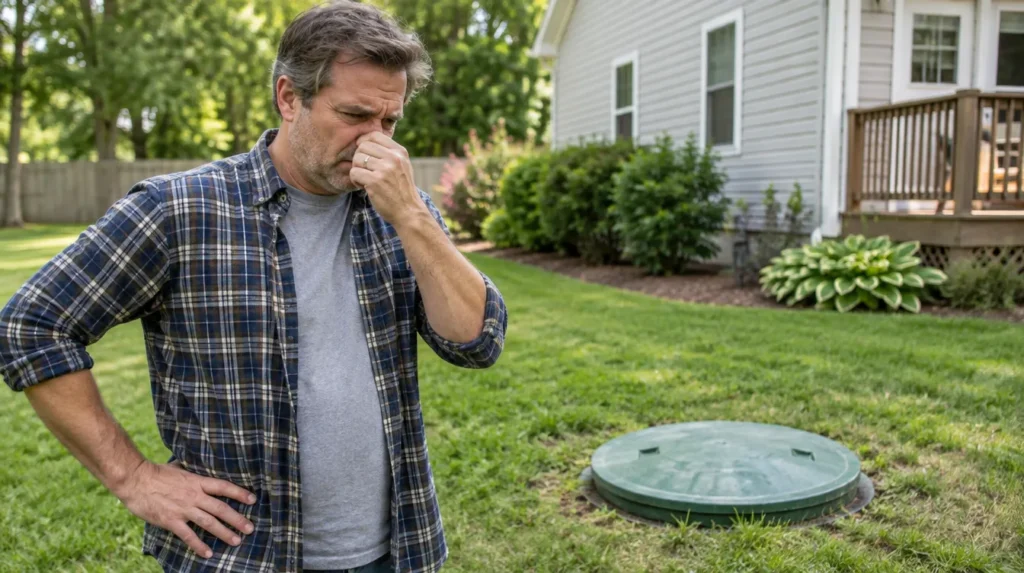
A working septic system should not smell. Gases form naturally inside the tank, but a sealed tank and a properly vented plumbing system send them up and out above the roof. When you notice a sewage or rotten-egg odor inside the house or in the yard, something is letting those gases escape where they should not, or the system is not working the way it should.
Key points
- The rotten-egg smell is mostly hydrogen sulfide, one of the gases produced as waste breaks down in the tank.
- Inside the house, dry drain traps, loose toilet seals and blocked roof vents are common causes.
- Outside, check for loose or cracked tank lids first; a smell over the drain field can mean effluent is reaching the surface.
- A persistent odor with slow drains or wet spots needs a septic professional.
Where the smell comes from
As bacteria break down waste in the tank, they produce gases such as methane and hydrogen sulfide. In a normal system those gases travel back up the main drain line and leave through the plumbing vent pipe on your roof, well above where anyone can smell them. Water sitting in each drain trap (the U-shaped bend under sinks, tubs and floor drains) blocks the gas from entering the house.
Septic smell inside the house
1. A dry drain trap
Floor drains, guest bathrooms and basement sinks that are rarely used can lose the water in their trap to evaporation. Without that water seal, sewer gas comes straight up the drain. Run water for a minute in every unused drain. For floor drains, a little mineral oil on top of the water slows evaporation.
2. A loose toilet or worn wax ring
If the smell is strongest around a toilet, the wax ring that seals it to the floor drain may have failed. A toilet that rocks slightly is a clue. Replacing the wax ring is a common plumbing repair.
3. A blocked or damaged vent
Leaves, nests or ice can block the roof vent. When gas cannot escape through the vent, it can be pulled through the drain traps instead, which often comes with gurgling sounds. A plumber can check and clear the vent safely.
4. A full tank or a backup starting
When the tank is overdue for pumping or the drain field is not accepting water, wastewater moves slowly and gases build up. Odor plus slow drains throughout the house is a sign to call a septic professional.
Septic smell outside
Near the tank
Check that every access lid and riser is in place, not cracked and properly sealed. Sealing access lids and redirecting rainwater away from the system are among the first fixes septic contractors recommend. A faint smell right after the tank was pumped or opened usually fades within a day.
Over the drain field
A sewage smell over the drain field, especially with soggy ground or very green strips of grass, can mean effluent is reaching the surface. That is a health hazard and a sign of a failing drain field. Keep people and pets away and call a professional. Learn more in how a septic drain field works.
From the roof vent
An occasional smell from the roof vent on calm, cold or damp days can be normal, because the gas does not rise and disperse as quickly. If it is constant or reaches outdoor living areas, a plumber can extend the vent or add a carbon filter designed for plumbing vents.
What not to do
- Do not enter or lean into a septic tank. Septic gases can be toxic and can displace oxygen.
- Do not pour bleach or chemical drain openers into drains to “kill the smell”; they can harm the bacteria in the tank.
- Do not rely on additives. Read do septic tank additives work?
- Do not cover the smell with fragrance and ignore it if it keeps coming back.
When to call a professional
Call a septic professional if the smell comes with slow drains, gurgling, backups, wet areas in the yard, or if it persists after you have refilled traps and checked the lids. Those are among the warning signs of a failing septic system, and the tank may simply need pumping.
Sources
- U.S. EPA: How Your Septic System Works
- Angi: How to Get Rid of a Septic Smell Outside
- University of Minnesota Extension: Septic System Troubleshooting
- Ohio State University Extension: Why Do Septic Systems Malfunction?
Sewer gas can be dangerous in enclosed spaces. If you notice a strong odor indoors and feel unwell, leave the area, ventilate and contact a professional.