
If your home is not connected to a city sewer, everything that goes down your drains ends up in a septic system buried somewhere in your yard. Most homeowners never think about it until something goes wrong. Knowing how the system works makes it much easier to keep it healthy, spot problems early and avoid repairs that can cost thousands of dollars.
Key points
- A conventional septic system has two main parts: the septic tank and the drainfield (also called a leach field or soil absorption field).
- The tank separates wastewater into three layers: sludge on the bottom, scum on top and liquid effluent in the middle.
- Only the liquid effluent should leave the tank. The soil under the drainfield does most of the final treatment.
- Solids stay in the tank until they are pumped out, which is why regular pumping matters.
The four parts of a septic system
Extension specialists usually describe a septic system as four connected pieces: the house, the septic tank, the drainfield and the soil underneath it. Each one has a job, and a problem in any of them affects the others.
1. The house and the main drain line
Wastewater from toilets, showers, sinks, the dishwasher and the washing machine flows by gravity into one main drain pipe. That pipe leaves the house and carries everything to the septic tank.
2. The septic tank
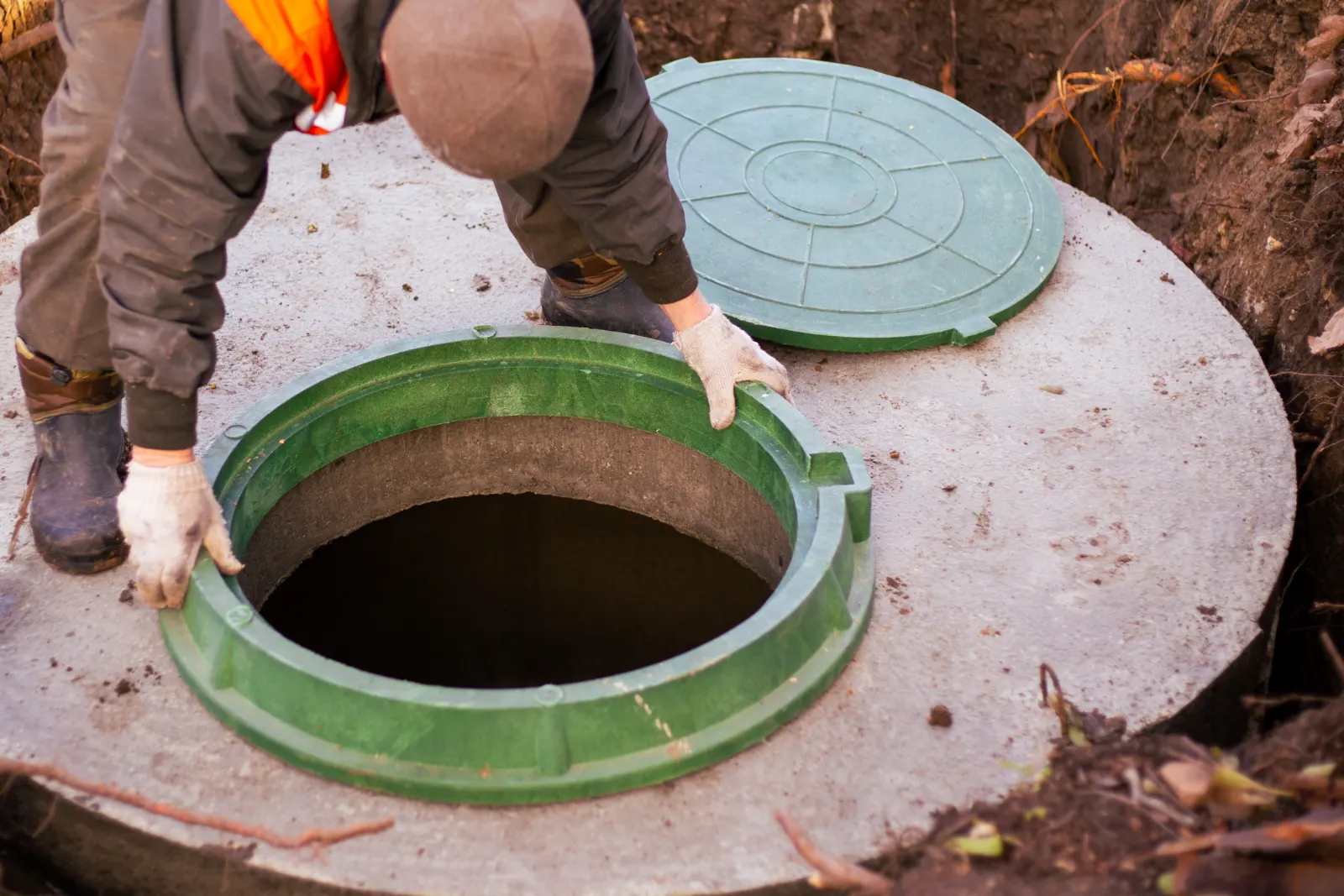
The tank is a buried, watertight container, usually made of concrete, fiberglass or polyethylene. Most homes have a tank between 1,000 and 1,500 gallons, although older or smaller houses may have less. The tank holds wastewater long enough for it to separate into layers:
- Sludge: heavier solids sink to the bottom. Bacteria break part of them down, but a layer of sludge always builds up over time.
- Scum: fats, oils, grease and lighter material float to the top.
- Effluent: the partly clarified liquid in the middle. This is the only layer that should flow on to the drainfield.
Baffles or a T-shaped outlet pipe, and in some tanks an effluent filter, keep sludge and scum from leaving the tank. If those layers get too thick, solids can escape and clog the drainfield, which is the most expensive part of the system to repair.
3. The drainfield
The drainfield is a shallow, covered area of unsaturated soil. Effluent from the tank flows into it through perforated pipes laid in trenches of gravel, or through plastic chambers, and seeps slowly into the ground. Some systems use a distribution box to split the flow evenly between several lines.
A drainfield can only absorb so much liquid. If it receives more water than the soil can take, it floods, and sewage can come up to the surface of the yard or back up into toilets and sinks.
4. The soil
The soil is the part people forget, but it does the final cleanup. As effluent trickles down, the soil filters it and microorganisms remove harmful bacteria, viruses and some nutrients before the water reaches groundwater. That is why the type of soil and the depth to groundwater matter so much when a system is designed, and why you should never pave over or compact the drainfield.
What happens after you flush
- Wastewater leaves the house through the main drain line.
- It enters the septic tank, where solids settle and grease floats.
- Bacteria in the tank start breaking down organic matter.
- Clarified effluent leaves the tank through the outlet and, if present, the effluent filter.
- The effluent spreads through the drainfield pipes and soaks into the soil.
- The soil filters and treats it before it reaches groundwater.
Everything that does not break down, mostly sludge and scum, stays in the tank. A septic professional removes it by pumping the tank, typically every three to five years for an average household. See how much septic tank pumping costs to plan for it.
Conventional vs. alternative systems
The system described above is a conventional gravity system. Where the soil, slope or lot size does not allow one, health departments may require an alternative system. These can include:
- Pump or pressure-dosed systems that use a pump to push effluent evenly through the drainfield.
- Mound systems, where the drainfield is built in a raised bed of sand above the natural soil.
- Sand or media filters that treat effluent before it reaches the soil.
- Aerobic treatment units that add air to the tank so bacteria break waste down faster.
Alternative systems have pumps, float switches, alarms or other mechanical parts, so the EPA recommends having them inspected about once a year rather than every three years.
How to keep your system working
- Have the system inspected at least every three years and pumped when the inspector recommends it.
- Only flush human waste and toilet paper. Read what never to flush or pour down the drain.
- Spread out water use: fix leaks, run full loads of laundry and avoid doing all the washing in one day.
- Keep cars, structures and trees off the drainfield, and direct roof drains and sump pumps away from it.
- Learn the warning signs of a failing septic system so you can act early.
Frequently asked questions
How long does a septic system last?
A well-designed system that is pumped and inspected on schedule can last for decades. Tanks often outlast drainfields; drainfields usually fail early because of solids carried out of an unpumped tank or because the household uses more water than the soil can absorb.
Do I need to add bacteria or additives?
In most cases, no. Normal household waste supplies the bacteria the tank needs. Additives do not replace pumping, and some can push solids into the drainfield. Check with your local health department before using any product.
How do I find my septic tank?
Start with your property records or the permit file at your county health department, which often includes a site drawing. You can also follow the direction of the main drain pipe where it leaves the house; the tank is usually 10 to 25 feet away.
Related guides
Sources
- U.S. EPA: How Your Septic System Works
- U.S. EPA: How to Care for Your Septic System
- NC State Extension: Why Do Septic Systems Fail?
This guide is general information for homeowners. Local codes and system designs vary, so check with your county health department or a licensed septic professional before making changes.